Manager Review: Tom Slater
Tom Slater – Manager, Scottish Mortgage
- The world is changing faster than it has in decades. Scottish Mortgage would rather own the companies driving that change than shelter from it.
- Artificial intelligence is rewiring the global economy, creating the most important structural shift since the emergence of the internet.
- SpaceX’s progress in launch and connectivity highlights the value of patient ownership in exceptional private companies.
As with any investment, your capital is at risk.
It is difficult to recall a 12-month period in which more of the assumptions underpinning the postwar international order were deliberately dismantled. The pattern was visible from the first day of the new administration: the withdrawal from the WHO and the deconstruction of USAID signalled that America’s retreat from the international system was not a negotiating posture but a programme. The tariffs that followed in April, imposing sweeping duties on almost every country the United States trades with, extended that logic into commerce. The longest government shutdown in US history, a military intervention in Venezuela, and the US-Israel strikes on Iran in February 2026, which closed the Strait of Hormuz and disrupted a fifth of global oil trade, confirmed that the pattern was accelerating rather than moderating. These are serious developments, and several of our holdings bore the cost of them directly.
But we think the development that will matter most when this period is viewed in retrospect is not the fracturing of the old order. It is the construction of the new one. Beneath the geopolitical turbulence, a transformation of a fundamentally different kind is under way. The acceleration of artificial intelligence into a global infrastructure buildout is, in our judgment, the most important structural change in the global economy since the emergence of the internet, and we are still in its early stages. The major cloud platforms such as Microsoft, Amazon and Google have more than tripled their collective spending since 2023, with the largest now committing well in excess of $100bn annually. China’s DeepSeek demonstrated that the most advanced AI was not a US monopoly, triggering a competitive response that accelerated spending further. When the tariff regime has been renegotiated and the Strait of Hormuz has reopened, the rewiring of the global economy around artificial intelligence will still be accelerating.
The tension between these two forces, the dismantling of old arrangements and the construction of new capability, defined the portfolio’s year. The businesses at the infrastructure layer of the AI transition compounded through the geopolitical turbulence, largely unaffected by it. Those more exposed to cross-border commerce, consumer confidence, or the competitive pressures of a Chinese economy running on weak demand fared very differently. They paid the price for a world that shifted faster than their valuations had assumed. The gap between these two categories of business widened significantly over the year.
SpaceX
SpaceX was by far the largest single contributor to returns this year. At the year end, it represented over 19 percent of the Company’s assets, a degree of concentration which is highly unusual for us. It would be remiss not to acknowledge the potential for volatility that comes with a position of this size.

SpaceX should no longer be thought of as an aerospace contractor but as a dual monopoly: the world’s dominant launch provider and a global connectivity utility with the potential for software-like margins. Though the launch vehicles generate the media attention, the valuation has been driven primarily by its satellite communications subsidiary, Starlink, which is building the kind of predictable, highly profitable revenue that the best software businesses aspire to. The difference is that its assets are in orbit and extraordinarily difficult to replicate. The acquisition of xAI brings a further dimension that the market is only beginning to price.
Starlink added over 4.6 million new active customers in 2025, reaching nine million total and expanding into 35 additional countries. The acquisition of EchoStar’s wireless spectrum accelerated the push into direct-to-phone connectivity, a development that eliminates the need for dedicated user terminals by allowing standard smartphones to connect directly to Starlink satellites. A Pentagon contract for the Golden Dome missile defence programme underlined the growing dependence of the US government on SpaceX’s infrastructure for national security.
In a year when every government in the world was rethinking its communications dependencies, and when the closure of the Strait of Hormuz demonstrated how quickly critical infrastructure can be disrupted, SpaceX’s competitive position strengthened rather than weakened.
What makes the future potential of the company so striking is the convergence of SpaceX’s capabilities with the defining constraint of the AI era. The demand for electricity to power AI is growing exponentially. The supply, constrained by permitting, grid capacity and the sheer difficulty of building power infrastructure at the pace the technology requires, is not keeping up. Solar panels in orbit are up to 10 times more effective than those on the ground, operating outside the atmosphere and unconstrained by the day-night cycle. If Starship achieves the rapid, full reusability it is designed for, and the trajectory of progress suggests it will, the economics of placing compute infrastructure in orbit shift from speculative to compelling. SpaceX is not just building a connectivity business. It is positioning itself at the intersection of launch, energy, and AI in a way that no other company on Earth can replicate. That is why it is our largest holding.
SpaceX is a private company, but in April 2026 it filed the documentation with regulators to go public, targeting a mid-June listing on the stock market. As is standard ahead of a public listing, existing holders including the Trust will be subject to a lock-up period during which shares cannot be sold. This listing is the most visible instance of a broader development. The Trust holds several of the world’s most valuable private companies, and a number of them, including SpaceX, Anthropic, Databricks, ByteDance and Stripe, are now realistic candidates for public listings in the coming years.
We raise this not to speculate on timing but to point out that the assumption that private holdings are early-stage and speculative does not fit the reality of what we own. These are businesses operating at enormous scale, generating substantial revenues, and in several cases profits that would place them comfortably among the largest listed companies in the world. The closed-end trust structure means we are not forced to sell at the point of listing. We can hold through the transition and beyond. A listing changes the venue in which a company’s shares are traded. The opportunity and our reasons for owning it remain the same.
The AI Buildout
When every major cloud platform is spending more on infrastructure than most countries spend on defence, the businesses enabling that buildout operate in an environment that is fundamentally different from the rest of the economy. The growth rate of that spending will eventually moderate as physical constraints in power, land and manufacturing capacity impose themselves. But the absolute level of investment required is unlikely to diminish for years.
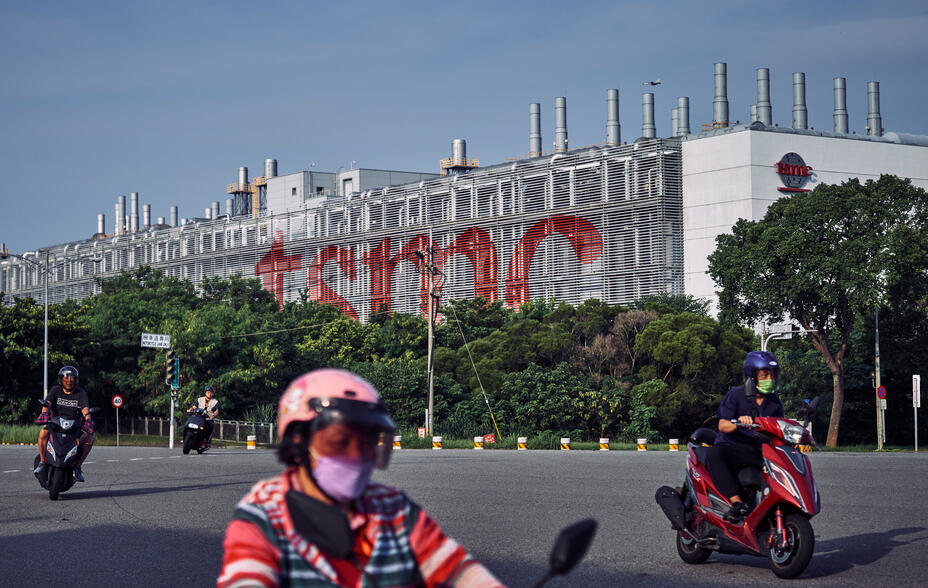
The portfolio is positioned at the critical nodes of this buildout. Chipmaker TSMC saw record revenues as high-performance computing rose to 58 percent of its business and announced $165bn of cumulative investment across six manufacturing facilities in Arizona.
ASML, the sole manufacturer of the lithography machines without which leading-edge chips cannot be produced, sits in an even more deeply protected position: every dollar of the world’s AI ambitions flows through its order book. We trimmed ASML through the year as the position grew, recycling some of the capital into NVIDIA, which offered a more attractive valuation relative to its growth trajectory and is continuing to benefit from insatiable demand for the computing power needed to build and run AI systems.
The impact of AI extended well beyond the infrastructure providers. Meta embedded AI into its content recommendation and advertising systems, driving measurable engagement gains at Facebook and Instagram. Amazon is deploying it across logistics, retail and cloud operations. Both positions were trimmed through the year but remain significant holdings. Shopify has embraced AI tooling to allow merchants to do more with fewer people. Its CEO’s internal memo requiring teams to demonstrate why AI cannot fulfil a task before requesting headcount captures a cultural shift we are seeing across many of our holdings.
There is an uncomfortable corollary to this. The same AI capabilities that are making businesses like Shopify more productive are compressing the valuations of much of the traditional software industry. When AI agents can write, test and deploy code at a fraction of the cost of a human engineering team, the per-seat pricing models on which many software businesses are built come under fundamental pressure. Software company valuations contracted sharply through the year.
We initiated new positions in AppLovin, whose AI-driven advertising platform is scaling rapidly, and in MongoDB, the database infrastructure business that underpins an increasing share of AI-native application development. Spotify and Roblox both contributed meaningfully, each benefiting from AI-enhanced personalisation in ways that reinforce rather than threaten their competitive positions.
In the private portfolio, we took a new position in Anthropic, which is at the heart of the transition from narrow AI tools to genuinely capable systems, and we regard it as one of the most important AI companies in the world. MiniMax, a Chinese AI foundation model company that we bought at its IPO, is a direct validation that world-class AI capability is being built well beyond the major US technology companies.
The Fracturing of Global Commerce
If the AI buildout represents the world constructing something new, the second defining feature of the year was something old being dismantled. The tariff regime described in the introduction, even after subsequent reductions and a changing legal basis for its imposition, represents a structural challenge to the free trade order on which much of the global economy was built.
When the trade architecture changes, everything built on top of it must adapt.
Several of our holdings felt this acutely. PDD’s international platform Temu, which had been built almost entirely on cheap Chinese cross-border shipping, was among the most directly affected businesses in the portfolio, and we reduced our position. Temu has responded by rapidly expanding local sourcing in its key markets. Adyen, the Dutch payments infrastructure business, saw its share price fall as volumes from the Asian ecommerce platforms most exposed to the tariff regime slowed sharply. We exited Wayfair entirely, concluding that the headwinds facing US consumer discretionary spending had shifted the risk-reward beyond what we were willing to hold. When the trade architecture changes, everything built on top of it must adapt.
Sea Limited faced a different but related challenge. Temu and TikTok Shop were subsidising aggressively to win share in Sea’s home markets across Southeast Asia, forcing heavy competitive investment that weighed on profits and the share price. Our additions early in the year were poorly timed.
The luxury industry was caught in the same structural disruption. The growth model that powered the sector for two decades rested on expanding Chinese wealth, aspirational cross-border travel, and frictionless premium goods trade. Hermès underperformed significantly as Asia-Pacific demand fell short of expectations. We added to the position, viewing the weakness as an opportunity to increase exposure to what remains one of the highest-quality businesses in the world.
Ferrari’s Capital Markets Day triggered its worst day as a listed company after management chose to prioritise long-term brand protection over the growth trajectory the market had priced in. We regard that as the right decision for the business, even if it was not what short-term investors wanted to hear. In both cases, the underlying business quality is exceptional. What changed was the set of assumptions on which the world had been operating.
We do not view these disruptions as temporary. The imbalances in the global economy, in trade, in debt, in political cohesion, have been building for years. What this administration has done is bring the adjustment forward.
The Cost of Slower Growth
The most difficult area of the portfolio this year was China, and the real issue was not tariffs. It was what happens when well-capitalised companies fight for market share in an economy where domestic consumption is barely growing. Meituan’s decline is the starkest illustration. Its fall was driven not by tariffs or sanctions but by a ferocious price war as Alibaba and JD.com attacked its core food delivery business with aggressive consumer subsidies. The three companies incurred collective costs of over $14bn in two quarters. Meituan swung from substantial operating profit to a full-year loss. This was a war triggered by the decision of competitors to fight for share in an economy where growth had become scarce, a domestic reckoning with roots in the property correction and a consumer that has become more cautious.
What happened to Meituan is not an isolated case. It is a manifestation of something deeper in the Chinese economy that the Chinese themselves call neijuan, or involution, a competitive dynamic in which everyone runs harder for diminishing returns. The system of local government subsidies, cheap state-bank financing and tax incentives that reward production volume creates world-class companies but simultaneously destroys margins across entire industries.
Solar manufacturers are losing billions despite record shipments. BYD’s average selling price per vehicle has fallen steadily even as the technology in each car has improved. Companies that survive this environment emerge with cost structures and engineering capabilities that are extraordinarily difficult to compete with anywhere else in the world, which is precisely why we continue to invest in the best of them. But the process of selection is brutal.
New holding CATL was a conspicuous exception, and one of the year’s largest new positions. Its technology and manufacturing lead in electric vehicle batteries proved resilient. The energy transition that underpins demand for its products proceeds regardless of the domestic cycle, and it has built a competitive moat over years of sustained investment. We also took a new position in RedNote, the social media platform that has emerged as China’s leading lifestyle and consumer discovery app. Its engagement levels are remarkable and its advertising model is still in its early stages.

ByteDance, our third largest holding, sits in a category of its own. It is perhaps the only non-US company to have achieved dominant consumer reach across cultural and linguistic boundaries at global scale, through TikTok internationally and Douyin domestically.
The January 2026 deal that divested TikTok’s US operations into a majority-American joint venture resolved the most acute binary risk. Investor focus on TikTok’s US regulatory status has consistently undervalued the broader business. Douyin is the leading short-video and ecommerce platform in the world’s second largest consumer economy. ByteDance’s advertising technology is among the most sophisticated we have seen. The company generates profits at a scale that would place it among the largest technology businesses in the world if it were publicly listed, yet it trades in the private market at a meaningful discount to comparable US platforms. The gap between the quality of the business and the price at which the market is willing to own a Chinese technology asset of this sensitivity is wide. We do not believe the right response to geopolitical complexity is to invest only in places where the outlook feels comfortable.
Beyond AI
AI was the dominant narrative of the year, but it was not the only one. The portfolio’s exposure to the other themes we have been following for many years such as the digitalisation of finance, the evolution of transport, and healthcare innovation, continued to progress.
MercadoLibre, one of our largest holdings, delivered another year of strong operational progress as MercadoPago embedded itself as the dominant payments platform across Latin America and the core ecommerce business continued to take share. The company is reinvesting heavily in both commerce and fintech, a phase that compresses near-term margins but is building the infrastructure on which its long-term dominance depends.
What began as disruption is becoming the financial system itself. Stripe is moving well beyond payments into autonomous AI-driven commerce and digital currency infrastructure, two areas that look increasingly like the next layer of financial plumbing. Nu Holdings and Revolut are crossing a different threshold. Nu, to which we added, continued its profitable scaling across Brazil, Mexico and Colombia, and in January received conditional approval from US regulators to establish a national bank. Revolut received its full UK banking licence in March. Both are now regulated banks, not fintechs aspiring to become one.

The evolution of transport, through autonomy, electrification and new physical networks, continued to advance. Drone delivery company Zipline moved from pilot to commercial scale during the year. Its Dallas-Fort Worth rollout, which began with a Walmart launch in Mesquite in April 2025, expanded to roughly 20 sites by the year end, with Chipotle, Panera, Wendy’s and more than a dozen other retail and restaurant partners live on the platform. Global deliveries passed two million, and the company announced expansions to Houston and Phoenix. Aurora Innovation launched commercial driverless freight on the Dallas-Houston corridor and surpassed 100,000 autonomous miles without a safety incident. Joby Aviation progressed further through FAA certification. None of these businesses is generating the revenues their eventual opportunity warrants, and the market’s patience with long-duration ambition visibly shortened during the year.
In healthcare, Moderna was a positive contributor following a difficult few years. Its next-generation Covid vaccine launched successfully, its combination flu and Covid vaccine moved closer to approval in Europe, and its seasonal flu vaccine progressed toward a US regulatory decision. Positive long-term data from the personalised cancer vaccine programme with Merck reinforced the case that mRNA technology is moving well beyond its pandemic-era applications. Sentiment toward mRNA vaccines, having been deeply unfashionable for two years, recovered materially. Tempus AI continued to apply its genomic data platform to cancer care, and Insulet’s automated insulin pump remains one of the most compelling medical device businesses we own. The broader opportunity in mRNA medicines, genomic data and AI-enabled drug discovery is as exciting as it has ever been.
Active Management
SpaceX is a powerful illustration of why this Trust exists. We invested approximately £150m several years ago in a private company that most funds could not own, held it through periods when private market valuations were deeply unfashionable, and watched it compound into a position worth several billion pounds. That outcome was not available to a passive investor. It was not available to an active manager constrained by the need to stay close to an index, quarterly performance pressure, or a prohibition on private companies. It was available to us because of the specific structural advantages of a closed-end investment trust with a long-term mandate, patient shareholders, a board that judges the manager over years rather than quarters, and the willingness to look foolish in the interim.
The asymmetry embedded in that kind of outcome is what drives long-term portfolio returns. Academic research has shown consistently that the majority of wealth creation in equity markets comes from a very small number of companies. Most stocks underperform cash over their lifetimes. The entire excess return of the equity market is generated by the outliers. The implication is that if your portfolio does not own the outliers, or sells them too early, you will almost certainly underperform. Our approach is designed around this reality. We concentrate the portfolio in businesses we believe have the potential to be exceptional, we hold them for years rather than quarters, and we accept the volatility that comes with that conviction. Meituan’s price war, the compression of software multiples, the repricing of Chinese assets are what it costs to be positioned for asymmetric outcomes. We would rather bear them than own a portfolio designed to avoid them.
For a fund like Scottish Mortgage... this volatility is the opportunity, not the risk.
The index, by contrast, is designed to do the opposite. It buys more of what has already risen and sells what has fallen. A passive allocation to a global equity index today is a 63 percent bet on the United States, a 33 percent bet on the technology sector, and a position in which over 35 percent of your capital sits in ten companies. That is not a diversified default. It is a concentrated portfolio with a very specific set of assumptions embedded in it.
At the same time, individual stocks have become more volatile, and the volatility is increasingly disconnected from anything happening in the underlying businesses. Fundamental investors now account for less than 15 percent of US equity trading volume. The rest is driven by participants whose time horizons are measured in days or weeks, and whose borrowed money amplifies every move. When they sell simultaneously, as happened in March, share prices can move 20 percent or 30 percent in a matter of days for reasons that have nothing to do with the companies in question. For a fund like Scottish Mortgage, which holds concentrated positions for years and can invest in private as well as public markets, this volatility is the opportunity, not the risk. The gap between what businesses are worth over a decade and what a market dominated by short-term participants prices them at on any given day is where we have always worked. It is widening.
We recognise that this makes the experience of owning Scottish Mortgage less comfortable than it would be if we managed the portfolio closer to a benchmark. The volatility is real and we do not dismiss it. But the alternative, a portfolio constructed to minimise short-term deviation from an index, would mean owning less of what we believe in and more of what we do not, precisely when judgement is becoming more important.
Looking Forward
We own seven of the world’s 10 most valuable private companies. We own businesses at the epicentre of the AI buildout, in the infrastructure of global commerce, and at the frontier of industries from electric vehicles to satellite communications to autonomous logistics. The opportunity ahead of these businesses is, in most cases, greater than what lies behind them.
The forces that defined this year, the AI buildout, the retreat from multilateralism, the competitive reckoning in China, are interlocking, not independent. Navigating a world shaped by them requires patient ownership of exceptional businesses and the willingness to hold them through periods of discomfort. That is what Scottish Mortgage has always done. The world is changing faster than it has in decades. We would rather be invested in the companies driving that change than sheltering from it.
Scottish Mortgage
Annual past performance to 31 March each year (%)
|
|
2022 |
2023 |
2024 |
2025 |
2026 |
|
Share Price |
-9.5 | -33.5 | 32.5 | 6.0 | 26.8 |
|
NAV* |
-13.1 | -17.8 | 11.5 | 11.2 | 27.4 |
|
Benchmark** |
12.8 | -0.9 | 21.0 | 5.5 | 18.0 |
Performance figures appear in GBP, total return. NAV is calculated with borrowings deducted at fair value. *NAV = Net Asset Value. **FTSE All World Index (GBP) TR. Performance source: Morningstar and FTSE.
Past performance is not a guide to future returns.
Legal notice
Source: London Stock Exchange Group plc and its group undertakings (collectively, the "LSE Group"). © LSE Group 2025. FTSE Russell is a trading name of certain of the LSE Group companies. "FTSE®" "Russell®", is/are a trade mark(s) of the relevant LSE Group companies and is/are used by any other LSE Group company under license. All rights in the FTSE Russell indexes or data vest in the relevant LSE Group company which owns the index or the data. Neither LSE Group nor its licensors accept any liability for any errors or omissions in the indexes or data and no party may rely on any indexes or data contained in this communication. No further distribution of data from the LSE Group is permitted without the relevant LSE Group company's express written consent. The LSE Group does not promote, sponsor or endorse the content of this communication.
Unlisted investments such as private companies, in which the Trust has a significant investment, can increase risk. These assets may be more difficult to sell, so changes in their prices may be greater.
About the author - Tom Slater
Manager, Scottish Mortgage
Tom Slater is manager of Scottish Mortgage. He joined Baillie Gifford in 2000 and became a partner of the firm in 2012. Tom joined the Scottish Mortgage team as deputy manager in 2009, before assuming the role of Manager in 2015. Beyond that, he is the head of the US Equities team and a member of another long-term growth equity strategy. During his time at Baillie Gifford, Tom has also worked in the Developed Asia and UK Equity teams. Tom’s investment interest is focused on high-growth companies both in listed equity markets and as an investor in private companies. He graduated BSc in Computer Science with Mathematics from the University of Edinburgh in 2000.
Regulatory Information
This content was produced and approved at the time stated and may not have been updated subsequently. It represents views held at the time of production and may not reflect current thinking. Read our Legal and regulatory information for further details.
A Key Information Document is available by visiting our Documents page. Any images used in this communication are for illustrative purposes only.
This communication does not constitute, and is not subject to the protections afforded to, independent research. Baillie Gifford and its staff may have dealt in the investments concerned. The views expressed are not statements of fact and should not be considered as advice or a recommendation to buy, sell or hold a particular investment.
Baillie Gifford & Co and Baillie Gifford & Co Limited are authorised and regulated by the Financial Conduct Authority (FCA). The investment trusts managed by Baillie Gifford & Co Limited are listed on the London Stock Exchange and are not authorised or regulated by the FCA.
Baillie Gifford Overseas Limited (BGO) provides investment management and advisory services to non-UK clients. BGO is wholly owned by Baillie Gifford & Co. Both are authorised and regulated in the UK by the Financial Conduct Authority.
Baillie Gifford Asia (Hong Kong) Limited 柏基亞洲(香港)有限公司 (BGA) holds a Type 1 licence from the Securities and Futures Commission of Hong Kong to market and distribute Baillie Gifford’s range of collective investment schemes and closed-ended funds such as investment trusts to professional investors in Hong Kong.
Baillie Gifford Asia (Singapore) Private Limited (BGAS) is regulated by the Monetary Authority of Singapore as a holder of a capital markets services licence to conduct fund management activities for institutional investors and accredited investors in Singapore. BGA and BGAS are wholly owned subsidiaries of Baillie Gifford Overseas Limited, which is wholly owned by Baillie Gifford & Co.
Scottish Mortgage Investment Trust PLC (the “Company”) is an alternative investment fund for the purpose of Directive 2011/61/EU (the “AIFM Directive”). Baillie Gifford & Co Limited is the alternative investment fund manager (“AIFM”) of the Company and has been authorised for marketing to Professional Investors in this jurisdiction.
This communication is made available by Baillie Gifford Investment Management (Europe) Limited (“BGE”), which has been engaged by the AIFM to carry out promotional activities relating to the Company. BGE is authorised by the Central Bank of Ireland as an AIFM under the AIFM Regulations and as a UCITS management company under the UCITS Regulation. BGE also has regulatory permissions to perform promotional, advisory and Individual Portfolio Management activities. BGE has passported its authorisations under the mechanisms set out in the AIFM Directive.
Australia
This information is provided to you on the basis that you are a “wholesale client” within the meaning of section 761G of the Corporations Act 2001 (Cth) (“Corporations Act”). In no circumstances should this information be made available to a “retail client” within the meaning of section 761G of the Corporations Act. This information contains general information only. It does not take into account any person’s objectives, financial situation or needs.
Belgium
The Company has not been and will not be registered with the Belgian Financial Services and Markets Authority (Autoriteit voor Financiële Diensten en Markten / Autorité des services et marchés financiers) (the FSMA) as a public foreign alternative collective investment scheme under Article 259 of the Belgian Law of 19 April 2014 on alternative collective investment institutions and their managers (the Law of 19 April 2014). The shares in the Company will be marketed in Belgium to professional investors within the meaning the Law of 19 April 2014 only. Any offering material relating to the offering has not been, and will not be, approved by the FSMA pursuant to the Belgian laws and regulations applicable to the public offering of securities. Accordingly, this offering as well as any documents and materials relating to the offering may not be advertised, offered or distributed in any other way, directly or indirectly, to any other person located and/or resident in Belgium other than to professional investors within the meaning the Law of 19 April 2014 and in circumstances which do not constitute an offer to the public pursuant to the Law of 19 April 2014. The shares offered by the Company shall not, whether directly or indirectly, be marketed, offered, sold, transferred or delivered in Belgium to any individual or legal entity other than to professional investors within the meaning the Law of 19 April 2014 or than to investors having a minimum investment of at least EUR 250,000 per investor.
Germany
The Trust has not offered or placed and will not offer or place or sell, directly or indirectly, units/shares to retail investors or semi-professional investors in Germany, i.e. investors which do not qualify as professional investors as defined in sec. 1 (19) no. 32 German Investment Code (Kapitalanlagegesetzbuch – KAGB) and has not distributed and will not distribute or cause to be distributed to such retail or semi-professional investor in Germany, this document or any other offering material relating to the units/shares of the Trust and that such offers, placements, sales and distributions have been and will be made in Germany only to professional investors within the meaning of sec. 1 (19) no. 32 German Investment Code (Kapitalanlagegesetzbuch – KAGB).
Luxembourg
Units/shares/interests of the Trust may only be offered or sold in the Grand Duchy of Luxembourg (Luxembourg) to professional investors within the meaning of Luxembourg act by the act of 12 July 2013 on alternative investment fund managers (the AIFM Act). This communication does not constitute an offer, an invitation or a solicitation for any investment or subscription for the units/shares/interests of the Trust by retail investors in Luxembourg. Any person who is in possession of this document is hereby notified that no action has or will be taken that would allow a direct or indirect offering or placement of the units/shares/interests of the Trust to retail investors in Luxembourg.
Switzerland
The Trust has not been approved by the Swiss Financial Market Supervisory Authority (“FINMA”) for offering to non-qualified investors pursuant to Art. 120 para. 1 of the Swiss Federal Act on Collective Investment Schemes of 23 June 2006, as amended (“CISA”). Accordingly, the interests in the Trust may only be offered or advertised, and this document may only be made available, in Switzerland to qualified investors within the meaning of CISA. Investors in the Trust do not benefit from the specific investor protection provided by CISA and the supervision by the FINMA in connection with the approval for offering.
Singapore
This communication has not been registered as a prospectus with the Monetary Authority of Singapore. Accordingly, this communication and any other content or material in connection with the offer or sale, or invitation for subscription or purchase, of the Trust may not be circulated or distributed, nor may be offered or sold, or be made the subject of an invitation for subscription or purchase, whether directly or indirectly, to persons in Singapore other than (i) to an institutional investor (as defined in Section 4A of the Securities and Futures Act 2001, as modified or amended from time to time (SFA)) pursuant to Section 274 of the SFA, (ii) to a relevant person (as defined in Section 275(2) of the SFA) pursuant to Section 275(1), or any person pursuant to Section 275(1A), and in accordance with the conditions specified in Section 275 of the SFA, or (iii) otherwise pursuant to, and in accordance with the conditions of, any other applicable provision of the SFA.
Where the Trust is subscribed or purchased under Section 275 by a relevant person which is:
(a) a corporation (which is not an accredited investor (as defined in Section 4A of the SFA)) the sole business of which is to hold investments and the entire share capital of which is owned by one or more individuals, each of whom is an accredited investor; or
(b) a trust (where the trustee is not an accredited investor) whose sole purpose is to hold investments and each beneficiary of the trust is an individual who is an accredited investor, securities or securities-based derivatives contracts (each term as defined in Section 2(1) of the SFA) of that corporation or the beneficiaries’ rights and interest (howsoever described) in that trust shall not be transferred within six months after that corporation or that trust has acquired the securities pursuant to an offer made under Section 275 except:
(1) to an institutional investor or to a relevant person or to any person arising from an offer referred to in Section 275(1A) or Section 276(4)(c)(ii) of the SFA,
(2) where no consideration is or will be given for the transfer;
(3) where the transfer is by operation of law; or
(4) pursuant to Section 276(7) of the SFA or Regulation 37A of the Securities and Futures (Offers of Investments) (Securities and Securities-based Derivatives Contracts) Regulations 2018.