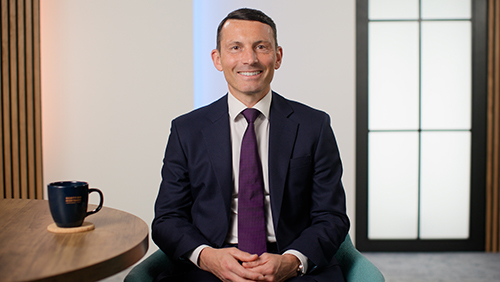
Max Levchin (ML): We refuse, never done, never will, we don't charge late fees. We don't charge any sort of fees. There's no reminder fees, snooze fees. They’re all these revenue drivers that the industry has invented over the years to just make a little bit more money.
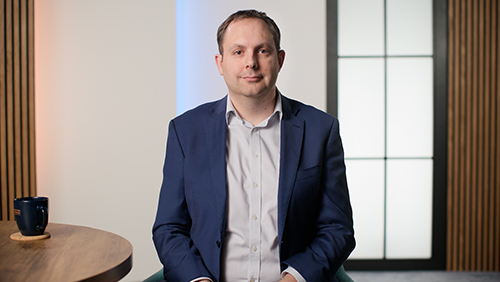
Tom Slater (TS): The people who use Affirm really value it. And I think that’s a really difficult edge for other people to imitate.
ML: When you're actually giving someone credit, you have to believe with a great degree of success that they will pay you on time, every time, because there's no slop. There's no room for error.
TS: It's really easy to grow a consumer lending business. It's really difficult to grow a consumer lending business, without losing a lot of money.
Claire Shaw (CS): Hello, and welcome to Invest in Progress, the Scottish Mortgage podcast. I'm Claire Shaw, Portfolio Director. In this podcast, we take you behind the scenes to hear conversations between our investment managers and leaders of the world’s most exceptional growth companies. As a UK investment trust, we can only market Scottish mortgage to certain audiences and geographies, so check out the podcast description to ensure this episode is suitable for you. And, as with any investment, your capital is at risk.
If you've ever been stung by credit card fees for an unpaid balance, you'll be familiar with the problem this episode’s guest set out to solve. Max Levchin founded Affirm, the buy now, pay later lender, to give shoppers a better deal. It's transparent about the cost of each instalment, with no late fees or hidden charges. And on many purchases, it offers a 0 percent interest rate. As you'll hear, Levchin was burned by the credit system himself, despite co-founding PayPal. That drove him to build something different.
Scottish Mortgage has been a shareholder since Affirm’s days as a private company, recognising it as one of a handful of businesses improving the financial system through a simpler, superior service. Scottish Mortgage Manager, Tom Slater, spoke to Max Levchin on the sidelines of a Baillie Gifford event in Pitlochry, after the two enjoyed a brisk cycle ride in the Highlands. Let’s hear from them now.
TS: Hi, Max. Thank you for coming on the show. Great to have you with us. Great to be out of my cycling gear and not being punished on the hills anymore.
ML: Thank you for having me. Thank you for putting up with me on the hills.
TS: We ask all of our guests the same opening question. Can you explain what Affirm does and what the problem is that the company is trying to solve?
ML: Affirm is a point-of-sale lending solution. Which is fancy for when you're trying to buy something, online or offline, you could use a credit card, but if you wanted a transparent solution where you knew exactly what the cost would be, yet pay over time, you would choose Affirm. We are a credit card alternative that functions pretty similar to your typical loan, but it happens in real time, at the point of sale, you find out exactly what the total cost would be. If there's any interest, it's pre-priced, so the number is disclosed to you upfront. The whole thing’s built around this idea of transparency and control in the hands of the buyer.
TS: At Scottish Mortgage, we believe that founder leaders play a critical role in shaping their businesses. I'd like to go back to your childhood and give our audience a sense of the forces that shaped you. You were raised in Kiev by your mother, a radiology researcher, your father a playwright. And then, in 1986, the Chernobyl disaster occurred about 80 mi away, and everything changed. Can you share what happened?
ML: Apparently, there was a nuclear power station not too far from where I lived. Unbeknownst to me, it blew up, or a reactor, actually, I think it melted onto itself. But that was the kick-off point of my journey to the US, which is where I ended up eventually. Between those two events, my family shipped me off to live with my grandmother in Crimea, where my father’s from. For a couple of years I lived in a very strange place, in the southernmost tip of Ukraine.
Between those two events, I went from being casually interested in computers, to becoming completely obsessed with them. By the end of that next four-year period, my family had gotten permission to emigrate out of, at the time still Soviet Union. Ended up in Chicago, with a clear mission to just spend as much time with computers as possible.
TS: Did I read somewhere that when you arrived in Crimea, officials thought your legs had become irradiated and might need to be amputated?
ML: One leg. Two legs were never in danger, just one. But that is a true story. There are all these moments in your life that you would like to maybe forget, but cannot because they’re so vivid. This is Soviet Union, 1986. The Chernobyl disaster’s very much hushed up. There's all sorts of guess work going on, people are trying to figure out what happened. Crimea is a two-day’s journey by train, which is how we got there. We left Kiev probably three days after the accident.
Five days in, there's some sense. There's a lot of fire department trucks going up north to try to put out the fire at the station, so it's understood there's some sort of a large disaster, big emergency. Some rumours are coming out that it may involve radioactivity. And so, a train from Kiev stops in the station we stopped in as we entered the peninsula. As we get off, there's some sort of a homebrewed collection of local authorities with a Geiger counter, which they must’ve procured sometime in the past 25 years. And we can't get off this train before we check you out for radioactivity.
My mother, who’s actually a scientist… The reason my family knew there was a radiological disaster was because my mom, bizarrely, or luckily, perhaps, was in charge of testing produce from all sorts of farms in Northern Ukraine for radioactive contamination. Which up until April 1986 was the most boring job in the world because there was no radioactive contamination. She started getting samples that were absolutely quite radioactive, and that’s how they knew to get their head on a swivel and figure out what just happened, and get their kids out of Kiev.
My mom was like, this is the world’s most ancient equipment, but sure, go ahead and make sure we’re clean. They check her out and then check me out, and get to my foot and this thing goes, ping. The guy who was operating it knew to switch to… The way Geiger counters work is you have a scale and a switch [unclear] go from nanofarads to microfarads, it's a progressively more impactful amount of radiation. And this guy goes, it's still all the way. Another switch, and it's still all the way. My mom’s like, what is going on here? At some point, this guy casually turns to his partner and says, we may have to take off the leg.
TS: Clearly something’s wrong with this kid.
ML: I'm like, oh my God. My mom, to her credit, says take off the shoe, try again. They took off my shoe and it turned out that I stepped on a rose thorn and it was embedded in my sole, and it was apparently quite radioactive. It's had no measurable impact on me so far, other than everything else. But the shoe, I've never seen that again.
TS: You arrived in the US, obsessed with computing, in your words. And you went on to study computer science at the University of Illinois, where you founded several start-ups. Then, after graduation, you moved to Palo Alto, where you met the hedge fund investor, Peter Thiel. The two of you created Confinity, a business that would eventually evolve into PayPal, after merging with Elon Musk’s X.com. You served as the chief technology officer. We've had long-standing holdings in Tesla and SpaceX, two companies where Musk applied the lessons he learned during his PayPal days. But what did those years teach you?
ML: One day, when I'm slightly less concerned with the consumer credit, I might try to write a book, because those were definitely the most formative years as far as, maybe all forms of education, but certainly all business education basically came from the four years of PayPal. The maybe tritest, but most important lesson, for sure, it is all about the people. And absolutely no ill will intended towards all the other people I've worked with between PayPal and Affirm, but it took me many years, even after we started Affirm, to recreate just the shear quality of the intellectual and cultural mosaic that we had at PayPal.
We were very young, so the level of truth telling while trying to learn all the things at the same time, was extreme. There was a very combative culture, but not in a negative way at all. People would tell you exactly how dumb your idea was before you could finish your sentences. Which spared us from doing a lot of dumb things, for sure. Probably learned more than my fair share about building network businesses. That’s actually maybe the most tangible, non-obvious thing.
When we just started, I had a very intuitive understanding of how businesses worked. Having growing up in a socialist country does not help you with understanding of business. But Peter was my crash course provider into how business works, how businesses should work. He’s the one that put me up to this understanding of the businesses that are truly worth building are network businesses. Where every new participant joining makes the business disproportionately more valuable for the owner of the business, but also for the rest of the user group of the business.
[Unclear] example, of course, the telephone network. We could all start our own, but it'll be very hard to pull everyone else over. Joining an existing telephone network is the easiest thing in the world because everybody’s already on it and it becomes more valuable when you join because now you're accessible to others. You can see that, to a young, impressionable, post-socialist mind, was like a truth bomb exploding in my head. I've been fascinated and obsessed with building network-driven businesses ever since. Affirm obviously is one of those as well, and it's not an accident.
TS: I'd love to explore that one with you further, but I'm going to keep going because we need to get to Affirm. If we skip forward, after you bought PayPal in 2002, you founded and sold a media company to Google. Became chairman of the crowdsource review platform, Yelp. Launched an incubator to help other tech firm get started. And then, in 2012, you returned to the world of fintech, with Affirm. What triggered that decision?
ML: When I was starting the media company, Slide, I'm not sure it was the first line of conditions I wrote down for myself, but it must’ve been in the top three, was don't do another payments company. Who wants their sophomore album to be compared to their freshman one? If you have a hit in your early career and build a payments company, it turns out to be PayPal. Do you want to build another payments company that is not PayPal? It may never be as important, as successful. By then I was smart enough to understand that I completely chanced into an incredible founding team, all of whom have since gone off to do other really cool things.
I was like, well, one thing I'm not going to do is I'm not going to touch payments, I'm not going to touch banking, I'm not going to touch lending. All these things, that’s it. I've done that in my 20s, I should do something else. So, I started something in media and gaming, and all sorts of things. It turns out I was very bad at it. It was acquired by Google and it was actually quite a profitable enterprise for the majority of its participants and most of its investors, but it fell very short of my expectations of what I thought it would be. Never really achieved the scale of revenue that I was hoping for. In many ways, it was one of these things that I got to find out that I'm not, in fact, very good at any business I randomly pick off a list.
I was having an early mid-life crisis. My wife, who’s very often the best mirror-holder in my life, for very long. We met first year of PayPal, so she’s seen me go through all the ups and all the downs for a very long time. She said, look, can we just agree on something pretty obvious here? I was like, what is that? All through the years of Slide and in between, and with Yelp and all the things you've stuck your fingers into, all you talk about is payments and networks and payment and payment of networks. Payments is what you're into. You want to avoid the shadow of your freshman album, but let’s face it, it's been ten years. There's no shadow left. Go start a payment company. Just get back to what you love to do.
And so, that was the push that I needed. And then it turned out that I had all sorts of latent ideas on payments and all the things it came with. Affirm, in many ways, was a deep breath that I took the year after PayPal and never let out. And as soon as I did, it's like, of course, this feels so natural. That’s what I should be doing.
TS: You had your own encounter with the credit card debt that led you to judge the existing system as stupid and broken. Tell us about that.
ML: I came to the US at 16. At that time, you could get a credit card, essentially at 18, on college campus. Which is now quite difficult to do because of something called the CARD Act in the US, and a bunch of other regulation came along, but this is roughly 1993, 94. I'm at the University of Illinois, everyone around me is getting their second credit card. I'm just finding out that that’s how you're supposed to use money. I, very naively, get talked into having a credit card that magically has no interest rate to it. Big zero poster, that you just give your email address and you receive a free T-shirt and a credit card in the mail. Why have I not known about all of this? It's amazing, basically borrow money for free.
90 days later, I received my first in a somewhat unpleasant series of phone calls from a collector, who alerted me to the fact that I have, in fact, been billed for a card that I've been using quite lavishly for the last three months. And I'm now 90 days past due and I'm dangerously close to being sent to a charge-off, which is very bad because it goes on your permanent record, in quite an ugly way, with your credit profile, and, and, and. And so, I had my first extremely cold shower of, here’s what happens when you don't pay your minimum payment. Which I was never quite alerted to, according to me, but of course it was in there, in the fine print, somewhere.
The thing that added insult to injury was the card was not, in fact, a 0 percent credit card, it was a zero with a very modestly sized asterisk. That explained that if you don't make the minimum payment every month, you will, in fact, be charged full interest, which was on the order of 29 percent, going back retroactively. Not only did I wake up to being delinquent, being collected from, having my credit record ruined, I also owed a lot more money than I'd spent. So I took care of that. I made sure I understood exactly what minimum payments were and how to not be in that trouble ever again.
Fast forward years, this is literally right after PayPal IPO, I decide to, now wife, then girlfriend, time for… Literally let my and her hair down by buying a convertible. Flew to LA to buy a convertible, right after PayPal IPO, suddenly independently wealthy. And was quite rudely declined credit by a car dealership. Which, up until that point, I'd never needed more credit than a credit card could offer me. The guy took pity on me and said, look, I even know who you are. I've seen the newspaper articles, that you're the PayPal kid. With all your other PayPal kids, you took the company public. Very proud of you, but your credit record is terrible and my credit policy at this dealership disallows me from giving you any sort of car loan. The only way you're going to drive home in this car is by paying cash. That’s it.
I was probably some deep shade of purple. My girlfriend was standing right next to me, going oh my God, I'm not actually with this person. I'm not sure who he is, really. I felt like I've… And if you're 24 years old, being embarrassed by a car dealer where you thought you were going to show off, and it turns out that your credit isn't good enough, it sticks with you.
TS: Your early investors included some of venture capital’s biggest names, including Andreessen Horowitz and Khosla Ventures. But you also noted at the time that some notable investors passed on investment, you didn't name those. But apart from your previous track record, what do you think it was about the idea that convinced those who did invest to do so?
ML: There's a whole class of companies where you're breaking new ground, but you're solving an existing problem that appears solved. I'm going to build a self-driving car and no one knows how to do it, but I will. That’s a class of investment risk that you have to believe, but you also know if it works, there's an outsized return and it's amazing.
I will make it easier to buy online through honestly and transparency doesn’t quite have the same ring. Now, it does turn out to be that money is one of the largest markets in the world. You're talking tens of trillions of dollars, just exchanging wallets and hands constantly all around the world. If it does work, and it gets 1 percent of that market or 5 percent of that market, it's an enormously scalable business. But you're showing up with your own solution to a market that may or may not care about the solution that you've invented.
In particular, the thing that I've always been very loud about and never shied away, why are we even doing this? Because I believe there's a better way, specifically with this lens of transparency and mission drivenness and total disclosure and all these thing. It doesn't quite have the same ring, I think, as some of the other. You have to be a missionary to join the mission that I set out for myself.
The national question then comes. Let’s say people actually do need this ultra-transparent payment method. If it is in fact true, why wouldn't just everyone do it? And the answer I gave, which is still true today, but at the time I had no proof, was if you leave, not just excessive interest, but also we refuse, never done, never will, we don't charge late fees, we don't charge any sort of fees. There's no reminder fees, snooze fees. They’re all these revenue drivers that the industry has invented over the years to just make a little bit more money. And people who were basically just like me, sloppy and incapable of reading fine print.
We said we'll do none of those things. We'll actually deliberately leave money on the table. The only way you can make a profitable business out of that is you have to be exceedingly good at underwriting. When you're actually giving someone credit, you have to believe, with a great degree of success, that they will pay you on time, every time, because there's no slop. There's no room for error. There's extremely little slop.
I showed up and said, look, before I decided to do all this payment stuff, I did a lot of computer science. I know quite a bit about machine learning. I spent a bunch of my life doing what is now known as AI. I think we can build some completely different algorithm types to do underwriting much tighter than what is done in this credit card issuing banks. They're just like, I'll give you a line of credit for seven years, good luck. It's going to compound, I'll make a lot of money.
We’d decided to uproot the entire business model, as we were reinventing the consumer product. And I think the people who bought into it were like, it's crazy, but if it works, it'll be very hard to replicate because you're diving into the math and science problem, much more so than meets the eye. And the ones who thought, it's not going to work, fell into two camps. Said this is a solved problem, my credit card works just fine. And then a maybe smaller group, the one that said it could work, but the complexity of doing this on a much thinner margin for error seems like not a risk we want to take.
TS: Scottish Mortgage invested in 2019. And since then, Affirm was listed, turned profitable. Expanded from the US into Canada, the UK. You're now growing more than five times the rate of overall US credit card spending, four times the rate of e-commerce growth. Really quite a trajectory. But for those who are unfamiliar with the business, just explain how it works from the customer’s point of view.
ML: The way it works is basically always the same. When you are shopping, typically we’re used for something that gives you a pause, whether you're going to pull the trigger on it right now or not. You will probably not think of Affirm for a cup of coffee, but if you're looking at a bicycle, which I certainly look at plenty of bicycles. You'll say it's nice, carbon frame, probably around at least £2,000. I could pay for it upfront, but that does put a bit of a crimp on the family budget. How about I pay for it over time?
You will see a little tag that says buy now, pay later, or pay for this at £60 a month over the next 18 months, or something like that. Right under the price tag at a typical online store. We’re also now quite available offline, so you'll probably see paper signage offline, although it's not quite as common yet. But online, your eye will naturally wander towards from the price right below, it'll say something like buy now, pay later, or pay over time with Affirm.
That’s all you really need to do to know we exist on this particular merchant. You can add this to your online shopping cart as you check out. There’ll be a choice between use your debit card or your credit card, or Affirm. When you click into Affirm, if we are already familiar with you, that is to say we've leant money to you before, we'll typically recognise you and you'll get a text on your phone saying, hey, confirm it's you by typing in this text. Or there's also some other ways to authenticate. But we'll very quickly establish who you are. And if we haven't dealt with you before, then we'll do something very similar to get you going.
The most important thing that happens is we run an underwriting model in real time, as we very quickly pull financial records that we buy, in real time, from partners all around the world or all around the countries where we operate. All this is disclosed to you, so you are giving us permission to pull the data. It's all entirely above board. We make a basically entirely machine-driven decision whether the amount of money you would like to borrow from us is something that we think you can comfortably pay us back, without all these excessive fees, without excessive interest, etc.
One of the cooler things that might happen, happens about 30 percent of the time, and we’re working all the time at increasing this. Many times, the merchant, sometimes the manufacturer of, in my example, the bike, will say this one will have no interest, no cost of borrowing at all. We will pay for your cost of money because we really want you to buy this thing.
Plenty of times, the manufacturer or the retailer don't have the margin or the capacity to do it, in which case we will tell you the extra you will pay. The interest will be, let’s say, another £100. That gets added to the total, divide that over 18 fixed payments, you will be done in exactly 18 months. Your first payment is due in 30 days. You're approved. You click, yes, I understand, that’s exactly what I'm committing to. You get the bicycle in the mail and your first bill from us arrives in 30 days. That’s how the whole thing works.
One maybe important footnote is if you say, you know what? I change my mind. I'd like to prepay all of it or some of it. We will take out the interest that you would've accrued if this would actually go on for 18 months. We go to great lengths to make sure you do not pay a penny more than you possibly would.
TS: Take that example where the merchant has paid your interest. The appeal to the merchant is that more customers will complete the purchase. But how do you convince the merchant that that is a better option for them than, for example, offering a discount or spending money on marketing?
ML: I personally used to do this, by going to merchants and saying, I will make you a small wager. Offer Affirm for one weekend on your site, and offer it with 0 percent interest. One of our core values as a company is no fine print because, typically, that's where you find zero, not actually zero. We take great pride in not having any kind of fine print, there's no asterisks next to our zeroes. I would first have to get through the hurdle of no, we’re not going to embarrass you. The zero in our case is always a zero, there’ll be not a penny more.
Then I say, you know what? I will pay for it personally. I will actually take care of the interest payments out of our own treasury for two days or one day, or however long you want to run the interest. If you don't see a meaningful change to your sales line, call me an idiot, throw me out, don't ever take my phone call again. If you see a meaningful increase, you'll have to pay for the remainder of our contract. I've won every one of those bets. I ran a good number in our first or second year of existence. It's been a very long time since I've had to prove the point. At this point, merchants expect to see at least a 20 percent increase in the top line, if they're willing to step in and pay consumers’ interest.
The next conversation with the CMO is, wait a second, if we have 9 percent to give to these Affirm guys, why can't I have 10 percent? Now run a 10 percent sale and our top line’s going to go up. It turns out that consumers have come to expect 10 percent sales as a kind of a baseline. They won't necessarily even react to a 10 percent sale nearly as well as they would to the idea that Affirm offers me a no-interest loan.
But the other part is to really motivate someone to decide yes, this discount is worth it. These days, it's 20 percent, maybe 25 percent. It's actually quite a bit cheaper to use Affirm as a promotional vehicle. The 2A of that argument, which most CMOs fortunately these days really understand, is we run too many 20 percent offs. The consumer that shops at your online store frequently enough starts to say, wait a second, these guys always have a 20 percent sale on. I shouldn’t buy full price. I'm just going to wait for the next 20 percent off to come in. Then it becomes really important for the retailer to say, price integrity is quite critical to us. We’re not going to just randomly throw a 20 percent at everyone. And so, they start leaning into the sort of things we do that much more.
TS: The other fast-growing part of your business is the Affirm Card, which I know has been your personal focus for the past few years. And this is a physical or virtual card that customers can use at checkout, wherever Visa is accepted, either to set up an instalment plan or debit their bank account for the charge. What advantage does that give to your business?
ML: It's a great necessity where, if you have somebody who loves the product. We, for years, and still do, actually, get emails from our borrowers, our shoppers, saying I loved using you at Wayfair and I found you on Amazon, and that’s great. Why aren't you guys available at Best Buy? Well, we’re really trying to convince them. We think it'll be a great partnership, but we just haven't quite launched them yet. Or fill in your favourite brand where we weren't yet accepted or aren’t yet accepted.
At some point, I said, we have to solve this problem. We have these committed users, who love the product, who really believe that it is a better alternative. But they don't shop where we tell them to, they shop where they need to shop. And so, we have to be accepted at every store, ideally right now. Even the ones that will take us another X years to actually get to a direct integration.
We partnered with Visa and said, what if we created a new kind of a card? This card is neither debit nor credit, it's called Visa Flex. It's a standard that we co-created with them, took a bunch of years to. Part of why it took so long is it took many regulatory hurdles and many complex conversations with all sorts of partners. But we showed up with a card that basically said this card knows how to switch. You can say that one is debit, so I'm just going to buy a cup of coffee.
But if I flip a bit in my Affirm app, I can program it to say my next transaction will be at Best Buy, and I want to borrow $2,000 to buy a TV. Not a bicycle there. And then it looks to the store, exactly like a debit card would. You swipe and you get your TV, and off you go. In your app, it says, hey, your pre-programed moment at Best Buy has just occurred and you now have a TV in your basket, presumably, and your next bill will arrive in 30 days. And it's an Affirm loan and you've pre-agreed to all the numbers, the way you would in a fully integrated environment.
It just completely fills the long tail, and some of the tail, it's not brands that you've never heard of either. It's actually extremely convenient. Initially, it started out really as a thing that we would give to our most frequent, most Affirm-prone consumers. As we saw it grow, we just realised that it's actually a great way of shopping, full stop. Now, every quarter we report the percentage of active consumers who are shopping with the card. And that number, in and of itself, has grown every quarter. The usage of the card and the users of the card are growing faster than our own core business. Which, as you pointed out, was four times the speed of e-commerce.
TS: The pay-over-time space has become increasingly competitive over the past few years. What are your thoughts on the current landscape? How does Affirm differentiate itself within that group?
ML: Fun fact. When we started out, I had a vivid, another one of these memories that stays with you for a while. I had a conversation with someone who ran a credit card issuing bank. The product wasn’t launched yet, so he couldn't really see what thinking of, so I described my plan. And he said, wait a second, no late fees? You're insane, young man. This guy’s recently retired. I wasn’t exactly young then, I'm certainly not as young now. But he legitimately could call me young man. Young man, you're insane. 40 percent of my profit margin is late fees. Please, do yourself a favour, just dispense with the notion already and let’s talk about real things here.
I said, you might be right, but I'm going to find out. Because my whole mission here is to prove to myself and the rest of us that it can be done. He said you'll be the first one, probably the last one. That was the end of that conversation. When we launched, we were the only lender, I think in the entirety of the US, that did not charge late fees, of all the types of lenders. We were quite unique. I think last I looked, and this obviously changes a little bit as competitive dynamics change in the market, but I think more than half of US buy now, pay later volume is now late fee free. We’d set the trend, proved that it's possible, and now the rest of our competitors have to say we can't really charge late fees either. Because these guys appear to be quite popular and consumers aren't stupid. They notice that there's no late fee here and they prefer that.
That turned out to be a great competitive mode, where we imposed on ourselves this idea of lower your available margin by not charging all these excessive fees. Therefore, be great at underwriting or die, had to become a competitor because we didn't die and we instead gathered 15 years of operating data that really allowed us to refine the models that we use to do this real-time underwriting. And it served us really well. As we get more data and get more frequency of consumer shopping, also get more merchant data from merchants as we integrate, we become smarter and smarter by underwriting.
Unlike credit cards, who underwrite once and then you shop, we underwrite every single time. Every transaction is underwritten in real time, every time. We have the advantage of being able to say, wait a second, there's something different about your current financial state right now, versus the last time we saw you, let’s say six months ago. We can see this in your overall financial data. And we'll go quite far in figuring this out.
For example, we can't make an instant decision, we'll ask them to connect their bank account to our system. So we can actually look at their cashflow and say, according to your cashflow, it's quite clear to us that you're overextended. We don't think you should borrow. And we go to great lengths to tell you why we think it's a bad idea for you to borrow right now. And we'll typically offer you options, like we can pre-pay half and then we'll lend you the rest, etc.
But the punchline is, the network affects of data are a great, powerful moat that we've built, as we go wider and wider in the US, the UK, and all the markets we’re planning to enter, we’re just that much better at underwriting. Which, of course, results in lower rates for consumers, lower rates for merchants. The cost of doing these 0 percent promotions comes down a little bit because we can afford to give some of that money back to them because we lose less money through better underwriting. Or approve more people by redeploying the money that way. Either way, we feel very good competitively, just because we've been at the hardest end of this particular scale, namely underwriting, for a very long time, with very, very consistent results and using and mining all the data that we pick up from that.
TS: I want to change direction now and talk a bit about Affirm’s cultural values. I read your Tumblr post on this topic, and just pick up on a few things.
ML: I'm laughing. I maintain my blog on an antiquated platform, but I quite enjoy it.
TS: You wrote that Affirm takes pride in providing safe access to fair credit, but doesn’t judge what consumers use it for. There may be members of our audience who question the ethics of encouraging people to borrow to make luxury purchases. Why take that approach?
ML: I believe the best culture is not just cast in stone. You have a formative period, one or two years probably from the founding, where the earliest people around the table get to have their say and challenge you as the founder, why are we doing the things we are doing and how? I'd always maintained this, if you feel like we’re doing something wrong… And the industry, by the way, there's a reason why people have [unclear] lending, I'm not convinced I want to join that company. Because the industry has distinguished itself as preying on people who are too busy to read the fine print, as it were in my case.
I'd always said, look, if you feel like we’re doing something wrong, if you feel like we’re not proud of how we operate or have even the slightest shadow of embarrassment, say it. Say it out loud, in an all-hands meeting, so all of us can hear it and we can respond.
There was a product manager named Daniel, who happened to be actually someone who went to the same exact university as I did, so I had a slightly deeper relationship with him than some of our other early people. Who had said I feel the need to ask, we are financing luxury watches of this new merchant we’d just signed, I think it was that. I don't want to judge, I really don't, but do we really… Is that a necessity? Is that a thing that we are helping people with? If they can't afford a luxury watch with their savings, and they're not going to spend their savings if they can, why are we in the mix here? We work with things that people need in their home. We finance baby carriages and tricycles for young families. Those make me feel great. But luxury watches, really?
I intuitively know the answer, that we don't get to decide. How do I articulate it clearly? I was fishing for a good answer in my own head. Our chief operating officer at the time said, Dan, what did you do this weekend? Dan said I went climbing, I always go climbing. He said, nylon rope, huh? Yes. What’s that run you per yard? He said, well, it's quite expensive. Did you use credit to buy your $2,000 worth of nylon rope? He said yes, I definitely paid for it over time. He said, that's the thing. The thing that’s a necessity to you is an absolute luxury to the majority of us. $2,000 for a pile of rope, really? That’s someone’s watch. It's connected to their identity in a way you'll never understand and it's not for you or for me or for us to understand.
The question we’re answering here is, is this a sound financial decision? If the answer is no, it doesn’t matter if it's a baby carriage, we have to decline that person because we are pushing them towards a financial cliff they don't want to be next to. And it's our responsibility to take care of them that way, even if it's not the nicest thing for them to hear. Just like it's not for us to judge whether someone’s essential thing is an indulgence, or vice versa. That’s a really, really succinct way of figuring out how we’re going to navigate this because it will come up again. And it has, and we finance plenty of luxury, and we also finance plenty of things that are obvious necessities. Every time we sign something where I think, that’s a good reminder of Dan and his multi-thousand dollar rope.
TS: You wrote that you encourage staff to argue using facts, wherever possible, but to give their gut a voice too. Can you share an example of how that’s worked to your advantage?
ML: The entire history of the company is this sort of conspiracy to disrupt credit card payments, while the majority of the world was telling us, what are you talking about? My credit card works just fine. One of the hardest things, by the way, about raising money for a firm was that one of the classic Silicon Valley morays is build for yourself. If you know the problem, you have a gut feeling for what will and will not work, what is a good solution, is not a good solution. And for me it was always the case, because I have my wounded memory of the credit card and the subsequent car failure and all of that.
I always knew this was a thing, but explaining it to somebody who’s got a $120 per square foot per year office on Sand Hill Road… but my credit card works fine and I have points. Of course you have points. The vast majority of Americans do not have points on a credit card. More than half of Americans revolve on a balance. That is to say, they don't fully pay off the balance on their credit card every month. They never fully pay off their balance, and that's where they accrue all the interest that people pay. North of $100bn of interest per year.
Trying to explain this idea, of this is actually quite an important solution, I know it in my gut, to someone who’s like, I don't remember the last time I wasn’t paid a six-digit salary and had the use of company resources. It was quite challenging. The core idea of look deep into the part you can't express, and if there's something there, it'll speak to you. That’s an important part of the ethos. The other part is that I really do believe that great product building is at least 50 percent having this moment where you're out-of-body experience and entering the mind of the customer.
And sometimes that person is really nothing like you. They may be a Midwestern housewife trying to make ends meet for her family. As much as I'd love to believe I understand that person logically, I was never that and I will never be. That’s where you have to rely on gut. Great products come from understanding and research and personal experiences, but sometimes, they're just like, I need to imagine what that feels like. And imagination isn't measured, it's in the gut.
TS: In our remaining time, I'd like to look ahead. You forecast more than $48bn of products and services will be bought via Affirm in your current financial year. It's a huge sum, but it's still less than 1 percent of total US retail spending. How big could Affirm’s total addressable market be? And what do you still need to do to achieve that?
ML: Cool thing about network effects is you can compound them for a very long time, without slowing down too much. That's one of the things that I learned from Peter Thiel, as he was giving me a crash course in business back in the late 90s, was most businesses just naturally plateau. It's just very hard to grow something at 40 percent year-over-year, at 30 percent year-over-year if you are using a human salesforce. Any form of growth engine at some point becomes an operating expense, maybe capital expense, that you just question whether it's sound to invest that much. Because what if the road runs out next year and then you suddenly have too much expense, etc.?
The company self, select downshift, but also, it just becomes harder and harder. Networks don't always have that problem. Frequently, they don't have that problem. In fact, it's often enough easier to grow a network, to accelerate growth of a network, when you hit a certain critical mass. Merchants, in our case, for example, naturally reach out to us now. It feels like an extreme form of privilege, where ten years ago, I would make bets over the phone with CEOs or merchants who never heard of me. I'd say let me finance your 0 percent programme for one weekend and then you can do it, if it works.
We naturally get outreach from merchants, brands you've heard of, for sure, saying hey, we would like to offer buy now, pay later. We understand you guys are the best. We’re excited by the 0 percent programme. Let’s agree on a price and how quickly can we go live? As you build a network, we constantly are told by the industry that we are expected to be a check-out, we’re expected to be available. Our card needs to work in more countries because people travel, etc.
It's not strange to me that our growth has been so consistent, it is a great measure of our ability to continue at this pace for a while, that we’re only 1 percent of total commerce. We’re only a couple of percentage points of e-commerce. We'll see where it tops out fully. Obviously, we have our sights on the entirety of credit card balances in the US, which is roughly $1.2tn, $1.3tn, last I looked. So, we've got a long way to go from the $48bn we’re currently forecasting.
If you look at really mature markets, where credit card rewards are not as pronounced. For example, Australia is a canonical buy now, pay later market. Weirdly enough, some things developed in Australia because it's so far away from everything, their own flora, their own fauna. Their own buy now, pay later sensations have happened entirely outside of our field of view. There, I think buy now, pay later got to a 20-plus percent of the total sales. In the that sense, we’re a total laggard, we have a long way to go.
TS: Another notable development is your partnership with Stripe, which is another of our holdings that enables AI-powered shopping assistants to handle purchases on a consumer’s behalf, according to their preferences. That paves the way for AI agents to start buying goods and setting up a buy now, pay later Affirm instalment. How significant could that become for your business?
ML: The one thing I think everyone understands about agentic shopping and all things AI and commerce intersecting, is that we don't know what the next 12 innings look like. It's so early and changing so rapidly, it's dangerously foolish, I think, to say, here’s exactly what the future looks like. The only thing I know is I probably cannot quite predict it.
That said, in those scenarios, what you want to do is you want to be at the forefront. You can't wait, you can't find out that the future looks this way and you're somewhere too far away from it. We've made it our business to be technically the strongest partner people that value such things can find. Part of why we've partnered with Shopify, and more importantly, they picked us as an exclusive partner, is we are a very engineering, computer science driven company, and so are they.
Having the language of let’s co-develop this thing together, we know exactly what to do, they know exactly what to do, it moves faster. That’s true just as well with Stripe. The founders there are computer scientists who have shared language of here’s what we think the future might look like, let’s go at it together and let’s build something exciting.
We think agentic shopping is very much a thing. We think it's starting to show up in interesting places. We have sometimes diverging opinions on the most important part of shopping. I think parts of shopping, certainly the parts that we cover the most right now, has some degree of entertainment to that. And you don't want to give that up to a robot entirely. Some parts that take too long, are too mechanical, absolutely will disappear. You will delegate the final step of the tapping or the virtual tapping of your payment instrument to AI quite happily. Because that’s a thing that we do once we've had the dopamine moment of I like that thing and now it's mine. Pay for the thing, robot, obviously will happen.
But exactly how all of that plays out, I think it's a little bit too early to declare the final form. But it is absolutely part of our mission to be in that mix, whether it's a human or a robot acting in a shopping context, we need to be available.
The one thing that I think is quite tailwind-like for us in that scenario, humans are fooled by zeroes with tiny asterisks. Robots are very happy to read all the fine print. And so, the era where you don't know it, but we’re making money out of you because you haven't bothered figuring out the exact mechanics of this particular complicated credit product, I think that entire era is ending. I think the nobody charged zero late fees except for us, and now it's half the industry. I think that stat is going to be no one charges late fees anymore because the robots are just not going to put up with that anymore. I think that’s coming very rapidly and it pleases my greatly that we started that trend.
TS: Max, it's been a pleasure talking to you. We always close with the same question. What does the world look like if Affirm succeeds in its mission?
ML: I think a very large percentage of people feel much more at ease about money. The way I measure my own success or my own impact as an entrepreneur is how many people my company’s been able to positively impact over the years. And I feel pretty good about that number so far, and yet, it's such a tiny percentage of the world. I think the hope for Affirm is this dread of looking at your balances, looking at your accounts, thinking about affordability. Which comes, by the way, both for the poor and the rich. No one loves thinking about money because it's a drag, it's complicated. It's deliberately obscured by someone and you can't quite figure out whom to ask for help.
It doesn’t have to be this way. And we've proven that for our little niche, because it is, it's still pretty small. We can alleviate the burden. People don't have this love affair conversations with their bankers. They don't grab somebody on a flight who they never met and say, I love your company. It means something and I think just the number of people who feel that great about their money because we are taking care of them, should be larger. I'd love to board a flight where everyone says, the Affirm guy, I love that.
TS: Max, thank you so much for joining us. If Affirm’s vision plays out, a lot of people will be better off for it, and that’s exactly the type of vision that Scottish Mortgage loves to back.
ML: Thank you.
CS: Tom, welcome back to our Edinburgh studio now. What a great conversation that was. Max’s story about facing one of his legs being amputated is probably one of those moments you don't forget easily. As always, we end the podcast by discussing the investment case from our perspective, as shareholders. Let’s start with what drove you to invest back in 2019? And this was before Affirm was listed or had become profitable. I'm interested, what was it that convinced you to take a position?
TS: When I met Max for a number of years, he had achieved so much prior to founding Affirm, so it made sense to take an interest in what he was doing. And it seemed like an area of finance that was really ripe for disruption because it wasn’t offering consumers a good deal. And actually, the opportunity for somebody who could do this in a better way and a more ethical way, seemed to me to be really big.
CS: Max is obviously one of those leaders who lives and breathes the business. From Affirm’s early days, personally convincing merchants to join up, to more recently establishing the Affirm Card. Our audience wouldn't have seen this, but he was even wearing Affirm branded socks when we recorded the podcast. In your opinion, what is it about having Max at Affirm’s helm that increases its chances of success?
TS: I think it's partly that ethical piece that we just talked about. But what I would also say is it's really easy to grow a consumer lending business. It's really difficult to grow a consumer lending business without losing a lot of money. There are often hard decisions to take, if you're making it more restrictive to make credit available, if you're slowing down lending growth because you're concerned about the environment. And that can be really difficult to do. If the stock market is expecting you to deliver a certain growth number in a particular quarter, and you say no, we’re not going to do that because I'm worried about lending in this environment. I think having that authority to actually make those decisions and allowing to grow the book responsibly and profitability is really important.
CS: As you discussed, Affirm pioneered the no late fees model. An increasing number of its rivals have now followed suit. From your perspective, is it Affirm’s underwriting edge, making real-time decisions on every purchase, informed by the 15 years of data, that keeps Affirm ahead of the pack?
TS: I think that’s part of it. This is really difficult to do. Think about the traditional model. You apply for a credit card, you get given a credit limit and then, if you want to buy something two or three years later, there's no checking about whether you can still afford that item. I think this model of underwriting in real time, for a specific purchase, is something that’s extremely difficult to do. And this technology piece is really important.
I think that technology-first approach, the ability to evolve to improve the product, I think that is really important. But I think there's more to it. I think if you are bringing your customer base to merchants, if you look at their net promotor score, the people who use Affirm really value it. I think that’s a really difficult edge for other people to imitate because if you're going to use Affirm, you're tying your brand to Affirm. And you're opening up your consumers to their experience, so you have to absolutely trust that it'll be a good one.
CS: Tom, you obviously need to consider the risks of any investment case as well. While Affirm has more than 300,000 merchant partners, a lot of its business comes from a handful of large players, including Amazon, one of our other portfolio companies. What’s your perspective on Affirm’s ability to ensure those key relationships really endure?
TS: I think you have to be executing well. You have to be delivering a good service to users. But I think what comes out of that is that ability to attract new customers. Those customers who wouldn't have made a purchase if Affirm wasn’t available. I think that's really valuable to merchants. Because if you're driving increased sales, if you're getting customers that you wouldn't otherwise have got, that’s really valuable. That’s not just about being a financial partner, that’s about being a marketing channel.
Then the other piece of it is, as you build up the Affirm customer base, you become more attractive over time. I think lending will always be a competitive space. There will always be lots of people pushing to make those loans. But can you do it efficiently and profitably, in a way that adds value for the merchant? And that is where it gets really difficult.
CS: And maybe, Tom, a final question. One of the things that stood out for me was Max’s comment about US credit card balances totalling something like $1.2tn against the roughly $48bn of lending Affirm is forecasting this year. That’s a huge gap. In your view, what has to happen for Affirm to close it, in a meaningful way?
TS: I think, partly, it's about brand and awareness. The people who don't know that this service exists or are cautious about trying it. I think it's about merchants embracing it as a form of new user acquisition because 0 percent loans that are actually 0 percent loans, I think are a really effective tool for merchants to acquire customers. That has to be part of the flywheel. I think there's scope to expand into other forms of lending. I think Affirm Card can develop into a much bigger business, because it massively expands the set of merchants that you can use the Affirm service at.
And then there's geographic expansion. This has been a predominantly US business to date, but it's growing into other markets now, including the UK. That will be another leg to the growth from here.
CS: Tom, I think that’s a pretty positive note to end on. Thank you for your insights, as always. And a big thank you to our guest, Max Levchin, the Founder and Chief Executive of Affirm, for such a candid and entertaining conversation.
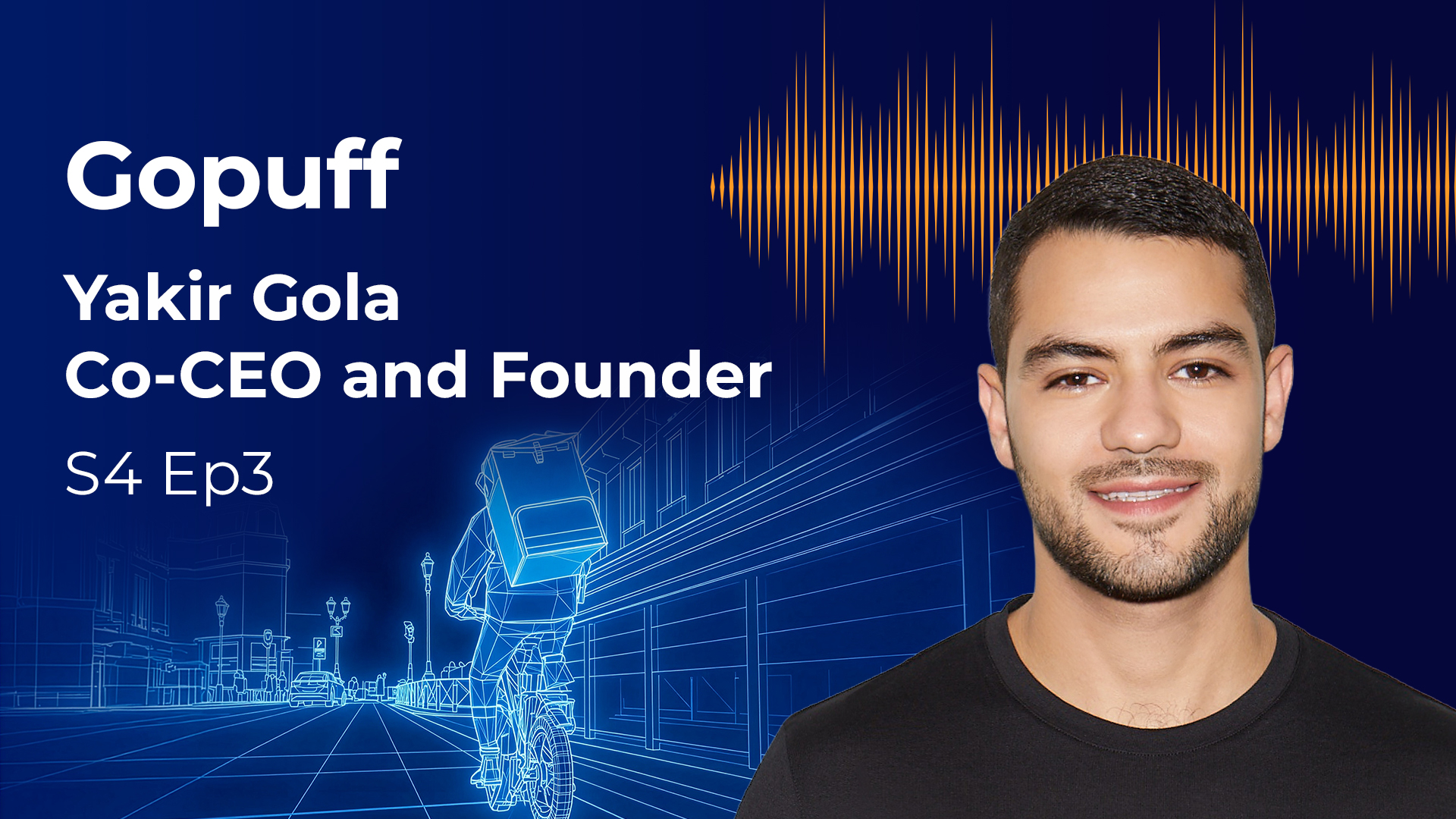
A reminder, we’re releasing ten-minute take cut-downs of each of this season’s interviews between the full episodes, for those times when you just want the highlights. And we've explained any jargon that cropped up in the show notes. Next time on Invest in Progress, Tom sits down with Yakir Gola, the co-founder of Gopuff. The company delivers groceries as quickly as 15 minutes after you order them. You won't want to miss this one.
If you haven't done so already, please subscribe to be the first to hear when new episodes become available. And you can learn more about Scottish Mortgage by visiting our website at scottishmortgage.com. You've been listening to Invest in Progress. Thank you for joining us.