IPO Talk is Back: Our Investment Horizon Never Left
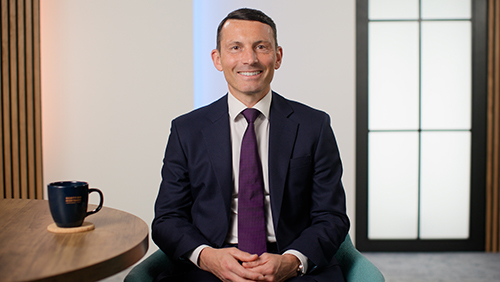
Claire Shaw – Portfolio Director
- Great businesses are not built on market timetables. Whether public or private is a detail, not a destination – that’s always been our view
- After a four-year drought, IPO markets are recovering – but the best investment cases were never anchored to a listing window
- What matters is scale, ambition and execution. A listing may change ownership structure, not the opportunity

As with any investment, your capital is at risk.
When market conditions shift, so does the conversation. In 2026, initial public offering (IPO) talk is back.
After years of caution, there is a tangible shift in mood – capital is moving, valuations are recovering and the appetite for new listings is returning. Speculation is building around some of the most valuable private companies ever created – SpaceX, Anthropic, Databricks and others are increasingly discussed as candidates for what could be among the most significant public market debuts in a generation.
For Scottish Mortgage shareholders, some of these names will be familiar. These are companies that we have held in our portfolio for years – businesses that have been building and compounding value on their own terms, away from daily market scrutiny. The question of whether and when they list is a natural one. But it is not the most important one.
For Scottish Mortgage, the return of IPO activity changes very little. We have always invested in exceptional growth companies. Whether those companies are public or private is a detail, not a destination – and that has never been more true than today.
IPOs Are Events, Not Objectives
IPO activity moves in waves, shaped by sentiment, liquidity and macroeconomic confidence. From a long-term investment perspective, IPOs are best understood as events – not outcomes in themselves. A listing is simply one of several paths a successful company might take; value can equally be realised through a merger, secondary transactions, or continued compounding in the private markets.
Scottish Mortgage does not invest because a company may list, nor with a fixed view on when a listing should occur. We are equally comfortable owning a business that remains private for decades as one that lists on public markets. What matters is consistent across both: the scale of the opportunity, the quality of execution and the durability of long-term value creation.
For long-term shareholders, a public listing does not mark the end of an investment journey – it is simply a change in venue. Some of Scottish Mortgage's most successful investments over the last decade are testament to exactly that – companies like Spotify and Wise, which we have held uninterrupted on their journey from private to public and continue to own today. The same logic applies to the private companies we hold now. SpaceX, Anthropic, Databricks and Revolut, companies we have owned for years, have been generating value throughout this period, entirely independent of whether a listing was imminent. That is the point. The absence of a listing does not signal a lack of progress – great businesses are not built on market timetables, and investment returns are not dictated by listing calendars.
Understanding the Four-Year IPO Drought
The weakness in IPO markets since 2022 was not incidental – it reflected three structural forces that combined to compress activity well below historical norms.
Rising interest rates made public markets hostile to high-growth companies, widening the gap between private valuations and public market expectations. The hangover from the 2020–21 IPO boom left scar tissue – many companies that listed in that window traded down sharply, raising the bar for what investors would accept. And the growth of late-stage private capital meant companies no longer needed to list to access funding or provide liquidity.
The result has been a structurally weaker IPO market – not because innovation has slowed, but because the economic and financial incentives to list have been less compelling. The cumulative effect has been a profound backlog. The pipeline of high-quality private businesses that could plausibly list – but have not – is arguably larger today than at any point in recent history.
For Scottish Mortgage shareholders, this period has been a lived experience. With IPO markets largely frozen and private companies staying private for longer, our private allocation sat at the upper end of our permitted range for much of this period.
The companies now being discussed as IPO candidates did not appear overnight. Many have been building value at their own pace for years – and it is precisely those companies that Scottish Mortgage has been backing. Free from short-term public market pressures, these businesses have invested on a long-term horizon, compounding on their own terms.
While improving sentiment in 2026 may suggest some headwinds are easing, the past four years have shown how sensitive listing activity is to macroeconomic conditions – and why the best investment cases are never anchored to market windows.
Private Companies in 2026: A Different Reality
The mental model many investors still apply to private companies is out of date. ‘Private’ conjures early-stage, speculative, unproven. The reality in 2026 could hardly be more different.
Consider the scale of what we own in Scottish Mortgage. Our private holdings dwarf many of the FTSE 100’s largest names – and we currently own six of the world's ten most valuable private companies.
- SpaceX has operated for over two decades, has launched more rockets than any government programme in history, and is building the infrastructure for both global satellite communications and the next era of space exploration.
- ByteDance operates at a scale – in users, revenue and global reach – that rivals the largest public technology companies on earth.
- Anthropic is at the frontier of AI research, developing systems that are reshaping how businesses and individuals interact with technology.
- Stripe processes hundreds of billions of dollars in payments annually and provides the financial backbone for a significant portion of global internet commerce.
- Databricks serves thousands of enterprises worldwide as their platform of choice for data and AI.
- Revolut has built what traditional banks spent decades failing to – a single app for banking, payments, trading and more, now trusted by tens of millions of customers worldwide.
These are not emerging businesses. They are operationally mature, globally scaled companies with proven revenue models, deep customer relationships and the kind of competitive positioning that takes years to build. The fact that they are private is not a caveat – it is a choice. They remain private because they can, not because they must.
For Scottish Mortgage, this is the deliberate result of a consistent philosophy: identify exceptional companies early, back them with conviction, and hold them patiently as they grow. The private exposure in the portfolio today is not a tactical allocation or a bet on an IPO cycle. It is what patient, long-term investing looks like in practice.
What an IPO Changes, and What It Doesn't
A public listing undoubtedly brings change. It introduces daily price movements, new disclosure requirements, a broader and more diverse investor base – these are not trivial. They shape how a company is discussed, scrutinised and valued in the short term.
But they do not touch what matters most. A listing does not alter the size of the market a company is pursuing, the strength of its technology, the quality of its leadership, or the long-term ambition of its founders. The fundamentals that made a business compelling before it listed are the same fundamentals that drive value creation after.
Amazon is perhaps the clearest illustration. For years after its IPO, it was misunderstood, undervalued and written off by investors focused on near-term profitability. The listing changed its ownership structure – it did not change the scale of what Jeff Bezos was building. The same logic applies today to the private companies we hold. SpaceX will not be a different business the day it lists. Stripe will not become more or less formidable because it has a public ticker.
For Scottish Mortgage, a listing does not trigger an automatic reassessment of a company's worth, nor a requirement to sell. We are as comfortable holding companies through ownership transitions as we are holding them through periods of market volatility. What we are focused on has never changed – the long-term trajectory of exceptional businesses, wherever they happen to trade.
Staying Grounded Amid the Noise
Let us be clear about what Scottish Mortgage's private company exposure represents.
- It is not a target allocation.
- It is not a thematic position.
- It is not an attempt to anticipate market fashions.
It is the natural outcome of a simple discipline: identifying exceptional businesses early and giving them the time they need to fulfil their potential. Some remain private for long periods. Others list and continue compounding in public markets. In both cases, our role is the same – patient capital, focused on long-term outcomes.
IPO cycles will come and go, as they always have. Periods of enthusiasm will be followed by periods of caution. Through all of it, our philosophy remains steady. We do not invest for IPO listings. We do not invest against them. We invest in exceptional growth companies – and we hold them with conviction through whatever ownership structure they inhabit.
What lies ahead is genuinely exciting. The companies at the centre of this conversation – businesses we have backed patiently through years of quiet compounding – are entering a period where their scale, ambition and impact will become visible to a far wider audience. For Scottish Mortgage shareholders, that is not the beginning of the story. It is the next chapter of one already well underway.
As market sentiment shifts and the boundary between public and private markets comes back into focus, we believe the most important distinction lies elsewhere – between short-term narratives and long-term value creation. That has always been our focus.
IPO talk may indeed be back. But our investment horizon never left.
About the author - Claire Shaw
Portfolio Director
Claire Shaw is a portfolio director and plays a prominent role in servicing Scottish Mortgage’s UK shareholder base. Before joining in 2019, she spent over a decade as a fund manager with a focus on managing European equity portfolios for a global client base. With a background in analysing companies and communicating investment ideas, Claire is also responsible for creating engaging content that makes the Scottish Mortgage portfolio accessible to all its shareholders. Beyond that, she works closely with the managers, meeting with portfolio companies and conducting in-depth portfolio discussions with shareholders.
Regulatory Information
This content was produced and approved at the time stated and may not have been updated subsequently. It represents views held at the time of production and may not reflect current thinking. Read our Legal and regulatory information for further details.
A Key Information Document is available by visiting our Documents page. Any images used in this communication are for illustrative purposes only.
This communication does not constitute, and is not subject to the protections afforded to, independent research. Baillie Gifford and its staff may have dealt in the investments concerned. The views expressed are not statements of fact and should not be considered as advice or a recommendation to buy, sell or hold a particular investment.
Baillie Gifford & Co and Baillie Gifford & Co Limited are authorised and regulated by the Financial Conduct Authority (FCA). The investment trusts managed by Baillie Gifford & Co Limited are listed on the London Stock Exchange and are not authorised or regulated by the FCA.
Baillie Gifford Overseas Limited (BGO) provides investment management and advisory services to non-UK clients. BGO is wholly owned by Baillie Gifford & Co. Both are authorised and regulated in the UK by the Financial Conduct Authority.
Baillie Gifford Asia (Hong Kong) Limited 柏基亞洲(香港)有限公司 (BGA) holds a Type 1 licence from the Securities and Futures Commission of Hong Kong to market and distribute Baillie Gifford’s range of collective investment schemes and closed-ended funds such as investment trusts to professional investors in Hong Kong.
Baillie Gifford Asia (Singapore) Private Limited (BGAS) is regulated by the Monetary Authority of Singapore as a holder of a capital markets services licence to conduct fund management activities for institutional investors and accredited investors in Singapore. BGA and BGAS are wholly owned subsidiaries of Baillie Gifford Overseas Limited, which is wholly owned by Baillie Gifford & Co.
Scottish Mortgage Investment Trust PLC (the “Company”) is an alternative investment fund for the purpose of Directive 2011/61/EU (the “AIFM Directive”). Baillie Gifford & Co Limited is the alternative investment fund manager (“AIFM”) of the Company and has been authorised for marketing to Professional Investors in this jurisdiction.
This communication is made available by Baillie Gifford Investment Management (Europe) Limited (“BGE”), which has been engaged by the AIFM to carry out promotional activities relating to the Company. BGE is authorised by the Central Bank of Ireland as an AIFM under the AIFM Regulations and as a UCITS management company under the UCITS Regulation. BGE also has regulatory permissions to perform promotional, advisory and Individual Portfolio Management activities. BGE has passported its authorisations under the mechanisms set out in the AIFM Directive.
Australia
This information is provided to you on the basis that you are a “wholesale client” within the meaning of section 761G of the Corporations Act 2001 (Cth) (“Corporations Act”). In no circumstances should this information be made available to a “retail client” within the meaning of section 761G of the Corporations Act. This information contains general information only. It does not take into account any person’s objectives, financial situation or needs.
Belgium
The Company has not been and will not be registered with the Belgian Financial Services and Markets Authority (Autoriteit voor Financiële Diensten en Markten / Autorité des services et marchés financiers) (the FSMA) as a public foreign alternative collective investment scheme under Article 259 of the Belgian Law of 19 April 2014 on alternative collective investment institutions and their managers (the Law of 19 April 2014). The shares in the Company will be marketed in Belgium to professional investors within the meaning the Law of 19 April 2014 only. Any offering material relating to the offering has not been, and will not be, approved by the FSMA pursuant to the Belgian laws and regulations applicable to the public offering of securities. Accordingly, this offering as well as any documents and materials relating to the offering may not be advertised, offered or distributed in any other way, directly or indirectly, to any other person located and/or resident in Belgium other than to professional investors within the meaning the Law of 19 April 2014 and in circumstances which do not constitute an offer to the public pursuant to the Law of 19 April 2014. The shares offered by the Company shall not, whether directly or indirectly, be marketed, offered, sold, transferred or delivered in Belgium to any individual or legal entity other than to professional investors within the meaning the Law of 19 April 2014 or than to investors having a minimum investment of at least EUR 250,000 per investor.
Germany
The Trust has not offered or placed and will not offer or place or sell, directly or indirectly, units/shares to retail investors or semi-professional investors in Germany, i.e. investors which do not qualify as professional investors as defined in sec. 1 (19) no. 32 German Investment Code (Kapitalanlagegesetzbuch – KAGB) and has not distributed and will not distribute or cause to be distributed to such retail or semi-professional investor in Germany, this document or any other offering material relating to the units/shares of the Trust and that such offers, placements, sales and distributions have been and will be made in Germany only to professional investors within the meaning of sec. 1 (19) no. 32 German Investment Code (Kapitalanlagegesetzbuch – KAGB).
Luxembourg
Units/shares/interests of the Trust may only be offered or sold in the Grand Duchy of Luxembourg (Luxembourg) to professional investors within the meaning of Luxembourg act by the act of 12 July 2013 on alternative investment fund managers (the AIFM Act). This communication does not constitute an offer, an invitation or a solicitation for any investment or subscription for the units/shares/interests of the Trust by retail investors in Luxembourg. Any person who is in possession of this document is hereby notified that no action has or will be taken that would allow a direct or indirect offering or placement of the units/shares/interests of the Trust to retail investors in Luxembourg.
Switzerland
The Trust has not been approved by the Swiss Financial Market Supervisory Authority (“FINMA”) for offering to non-qualified investors pursuant to Art. 120 para. 1 of the Swiss Federal Act on Collective Investment Schemes of 23 June 2006, as amended (“CISA”). Accordingly, the interests in the Trust may only be offered or advertised, and this document may only be made available, in Switzerland to qualified investors within the meaning of CISA. Investors in the Trust do not benefit from the specific investor protection provided by CISA and the supervision by the FINMA in connection with the approval for offering.
Singapore
This communication has not been registered as a prospectus with the Monetary Authority of Singapore. Accordingly, this communication and any other content or material in connection with the offer or sale, or invitation for subscription or purchase, of the Trust may not be circulated or distributed, nor may be offered or sold, or be made the subject of an invitation for subscription or purchase, whether directly or indirectly, to persons in Singapore other than (i) to an institutional investor (as defined in Section 4A of the Securities and Futures Act 2001, as modified or amended from time to time (SFA)) pursuant to Section 274 of the SFA, (ii) to a relevant person (as defined in Section 275(2) of the SFA) pursuant to Section 275(1), or any person pursuant to Section 275(1A), and in accordance with the conditions specified in Section 275 of the SFA, or (iii) otherwise pursuant to, and in accordance with the conditions of, any other applicable provision of the SFA.
Where the Trust is subscribed or purchased under Section 275 by a relevant person which is:
(a) a corporation (which is not an accredited investor (as defined in Section 4A of the SFA)) the sole business of which is to hold investments and the entire share capital of which is owned by one or more individuals, each of whom is an accredited investor; or
(b) a trust (where the trustee is not an accredited investor) whose sole purpose is to hold investments and each beneficiary of the trust is an individual who is an accredited investor, securities or securities-based derivatives contracts (each term as defined in Section 2(1) of the SFA) of that corporation or the beneficiaries’ rights and interest (howsoever described) in that trust shall not be transferred within six months after that corporation or that trust has acquired the securities pursuant to an offer made under Section 275 except:
(1) to an institutional investor or to a relevant person or to any person arising from an offer referred to in Section 275(1A) or Section 276(4)(c)(ii) of the SFA,
(2) where no consideration is or will be given for the transfer;
(3) where the transfer is by operation of law; or
(4) pursuant to Section 276(7) of the SFA or Regulation 37A of the Securities and Futures (Offers of Investments) (Securities and Securities-based Derivatives Contracts) Regulations 2018.